Overview
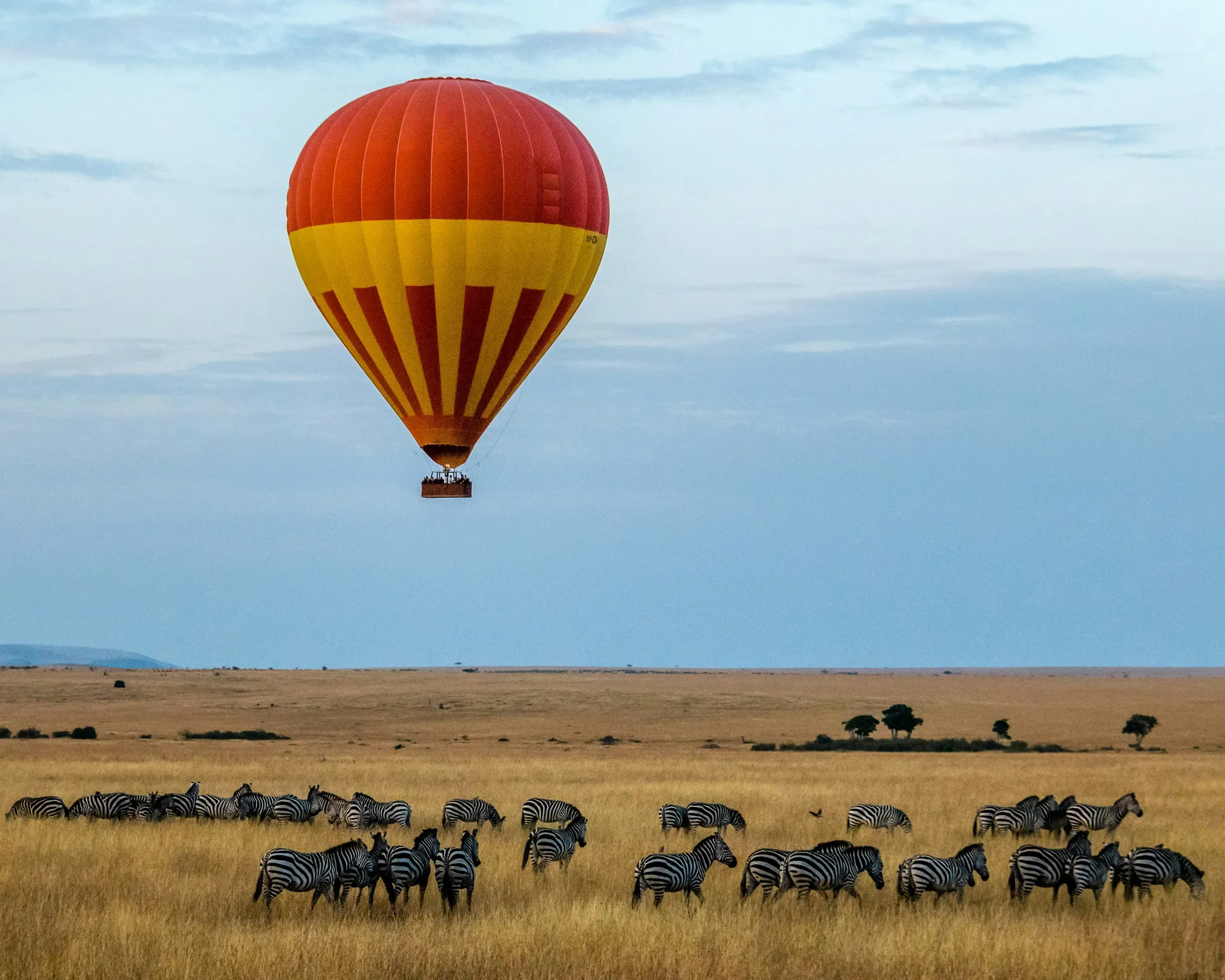
The Great Migration has been listed as one of the Seven Natural Wonders of the World. Every year over 1.5 million wildebeest, 200,000 zebras, and 350,000 gazelles move in a clockwise circuit through the Serengeti ecosystem, following the rains and fresh grass.
This epic journey — covering over 1,800km — is driven entirely by survival instinct. The animals are hunted constantly by lions, cheetahs, leopards, crocodiles, and hyenas. Every stage of the migration offers its own extraordinary wildlife drama.
Highlights
January–March (Calving Season): Southern Serengeti and Ndutu area. Up to 8,000 wildebeest calves born every day. Predator action is intense.
April–May (Moving North): Massive columns move north through central Serengeti as rains fall.
June–July (Western Corridor): Grumeti River crossings. Huge Nile crocodiles wait in the water.
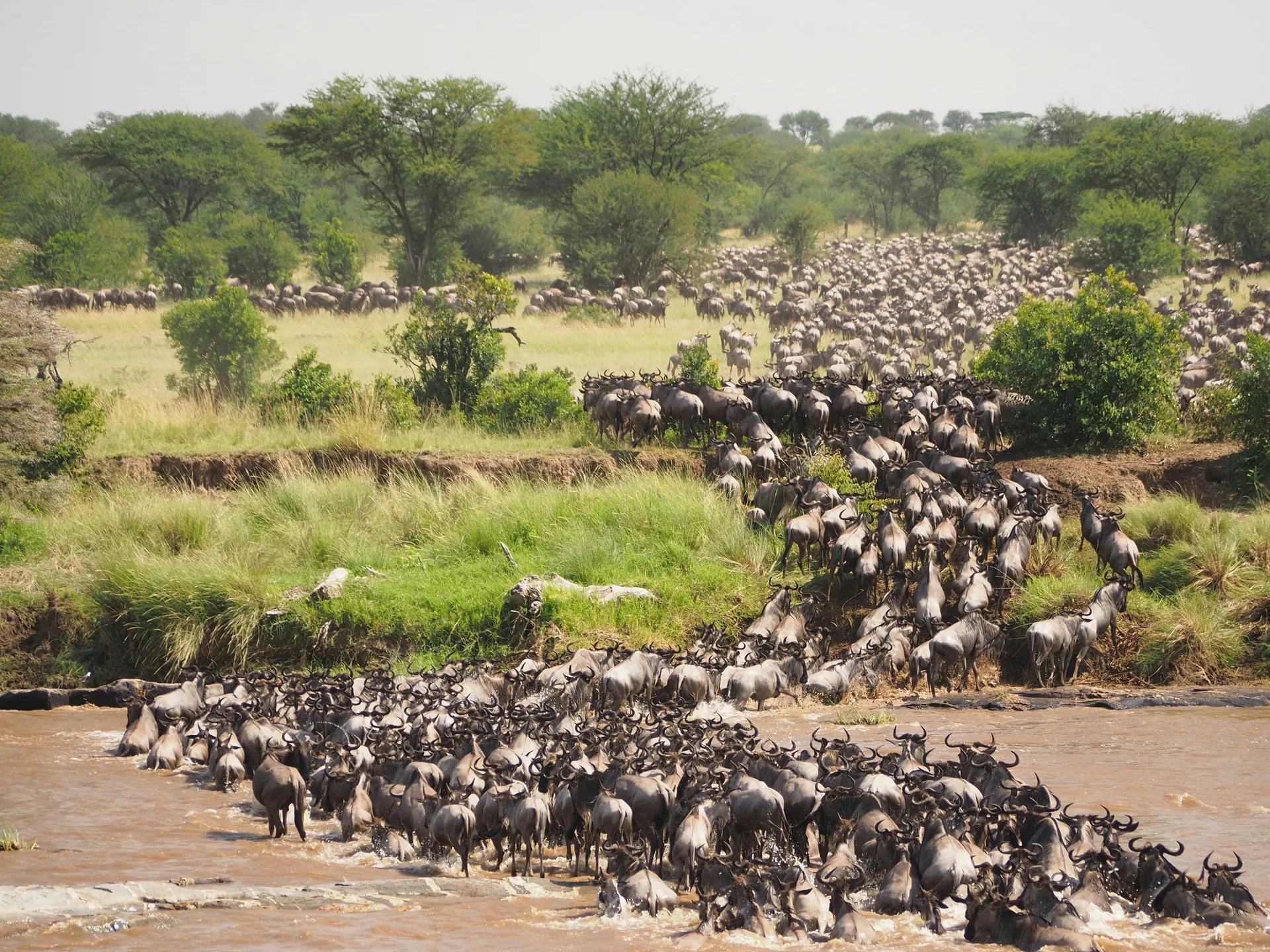
August–October (Mara River Crossings): The most dramatic stage — enormous herds launch themselves into crocodile-infested waters. Thousands of animals cross daily.
Common Questions
River crossings at the Mara River typically happen from late July to October. However, the migration is unpredictable — patience and a knowledgeable guide are essential.
Yes — the migration is always somewhere in the Serengeti ecosystem. Different stages offer different experiences. We can advise based on your travel dates.
Camps in the northern Serengeti — Kogatende/Lamai area — give the best access to the Mara River crossing points from July–October.
Enquire for details
Tell us your travel dates and we'll craft the perfect experience for you.
Enquire Now See All Experiences